Filipiniana Bolero: What It Is and How to Choose One
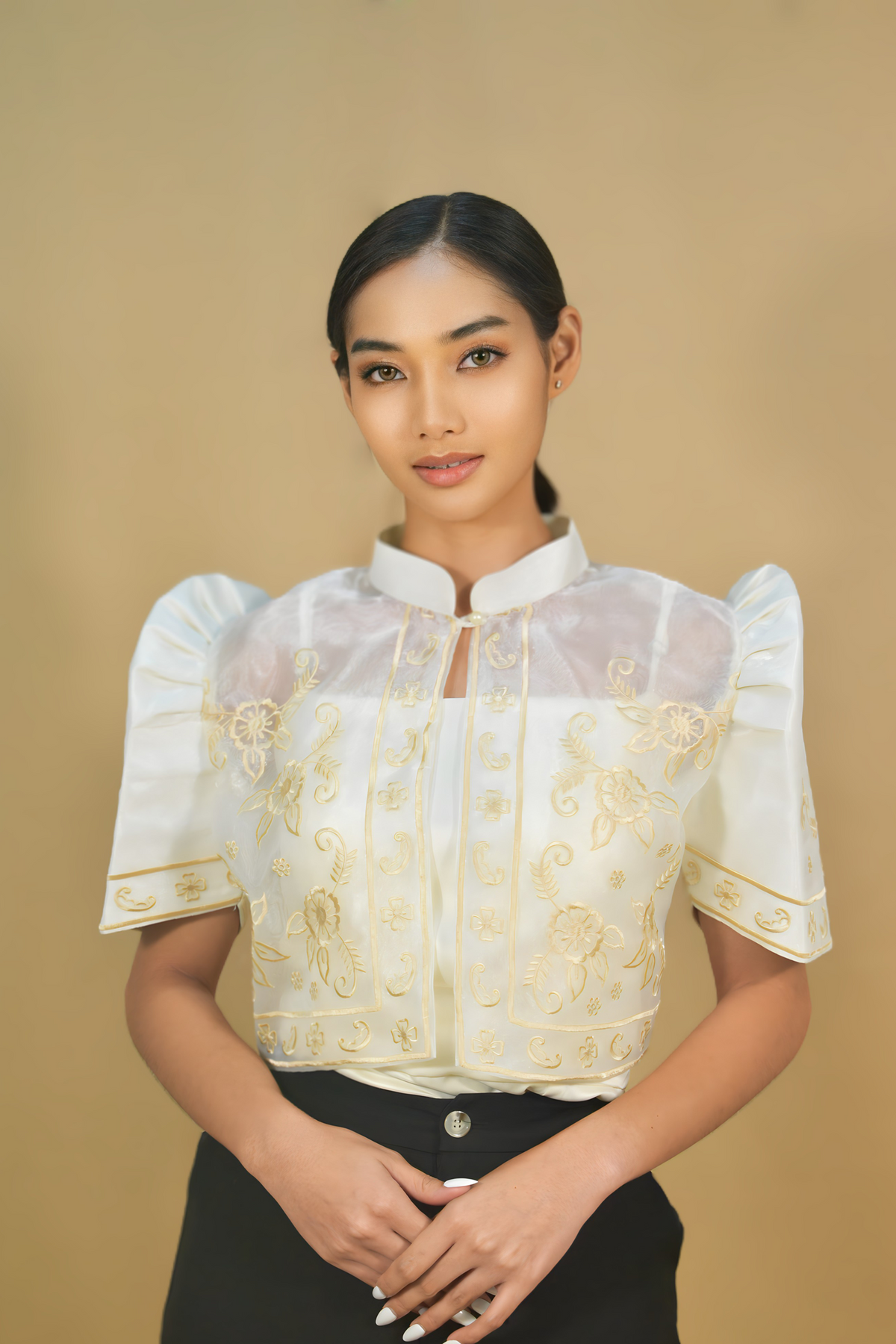
A Filipiniana bolero is a short open jacket, cut to end at or above the waist, usually with butterfly or puff sleeves. It goes over something else rather than being worn alone. That one fact is why it solves more problems than any other piece we sell.
If you own a strapless dress, a sleeveless gown or a jumpsuit and you have been asked to cover your shoulders, this is the piece that fixes it without buying a whole new outfit.
What a Filipiniana bolero is for
Three situations come up again and again.
- Church ceremonies. Many Filipino weddings are held in church, and shoulders are expected to be covered during the service. A bolero covers them and comes off at the reception.
- Making an existing dress cultural. A plain black dress plus a bolero reads as Filipiniana. The dress on its own does not.
- Cool venues and evening events. Sheer Filipiniana adds no warmth. A bolero in a heavier cloth does.
It also gives you a way to change the formality of an outfit halfway through an event, which a full dress cannot do.

Where it came from
The short jacket entered Filipino dress through Spanish influence, which is where the name comes from. It sat over the baro't saya as an extra layer, and in formal wear it developed the same butterfly sleeve as the terno.
The modern version kept the cropped line and lost most of the stiffening, which is what makes it wearable over clothes that were never designed for it.
Choosing the sleeve
The sleeve does more to set the character of a bolero than the fabric does.
Butterfly
Wide and lifted at the shoulder. The most traditional and the most formal. Takes up room at a seated table and does not fit under a coat.
Puff
Gathered and rounded rather than flat. Softer and younger. Easier to sit down in and easier to pack.
Straight or bell
Falls close to the arm with a slight flare at the cuff. The quietest option, and the one that works best at the office.
Three-quarter
Ends between elbow and wrist. Practical for eating and for handling a bag, which matters at a long reception.
Fabric
| Fabric | How it behaves | Best for |
|---|---|---|
| Organza | Crisp and sheer, holds a butterfly sleeve | Church weddings, formal receptions |
| Piña organza | Finer and more traditional, very sheer | Formal and cultural events |
| Jusilyn | Soft and light, easy to wash | Daytime events, repeat wear |
| Lace | Open pattern, drapes rather than standing | Evening events over a plain gown |
| Handwoven | Opaque, textured, with weight | Cultural nights and fiestas |
Sheer fabrics show what is underneath, which is the point of them over a plain dress. If you want the bolero to hide rather than frame, choose lace or a handwoven cloth instead.

Getting the Filipiniana bolero fit right
A bolero has fewer measurements than a dress but less room for error, because it sits on top of something else.
- Shoulder width is the one that matters. The sleeve is set at a fixed angle. If the shoulder seam sits too far out, the sleeve collapses instead of lifting.
- Check the length against your waistline. A bolero that ends at the widest part of the hip fights the dress underneath. It should stop at or above the natural waist.
- Allow for what goes under it. If the dress has its own sleeves or a thick strap, you need slightly more room across the back than your usual measurement.
- Sleeve length matters more than you expect. Full butterfly sleeves reach into your plate at a seated dinner.
Measure and compare against the size chart rather than ordering your usual number.
Colour
Two approaches work, and mixing them rarely does.
Neutral over colour. A cream, beige, white or black bolero over a coloured dress. This is the flexible choice, because one bolero then works with several dresses.
Matched tone. Bolero and dress in the same colour family, which reads as a deliberate set rather than a layer. More striking, less reusable.
What does not work is a strong colour over a different strong colour. Red over emerald reads as two separate garments arguing.

When a bolero is the wrong choice
It is worth being clear about the limits, because a bolero gets recommended for situations it does not suit.
If the dress underneath is already heavily embroidered, adding a worked bolero gives you two competing patterns and neither reads well. Pick one worked piece and keep the other plain.
If the event is outdoors in real heat, a second layer over a dress is warmer than a single Filipiniana dress cut for the climate. An alampay covers the shoulders with far less fabric.
And if you need the shoulders covered for the whole event rather than just the ceremony, a dress with its own sleeves is more comfortable than wearing a jacket for six hours. Look at the modern Filipiniana dresses instead.
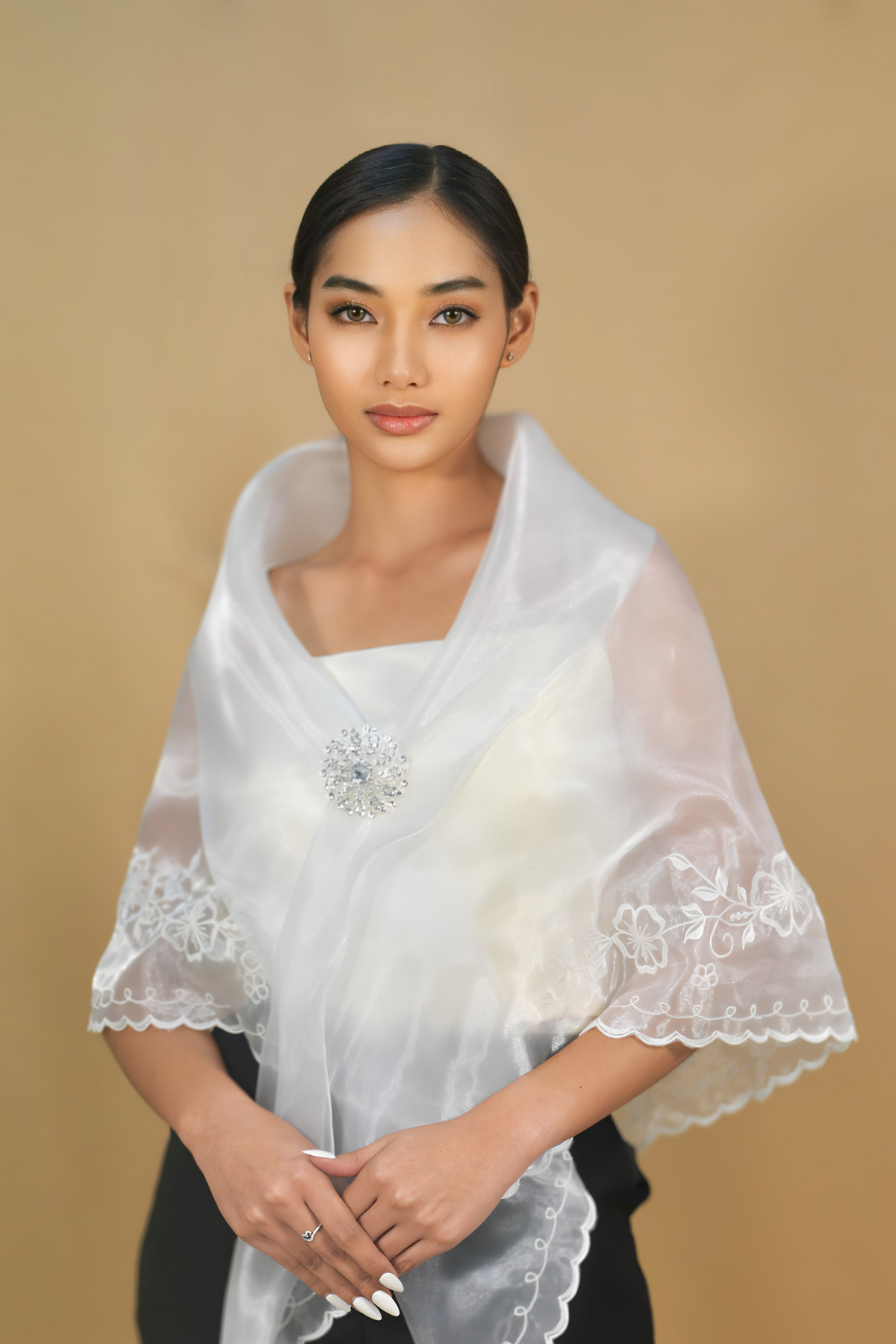
Bolero, alampay or pañuelo
All three cover the shoulders. They are not interchangeable.
| Bolero | Alampay | Pañuelo | |
|---|---|---|---|
| Form | Jacket with sleeves | Soft shawl | Stiff shoulder piece |
| Covers arms | Yes | No | No |
| Adds warmth | Some | None | None |
| Packs flat | Not if stiffened | Yes | No |
For a church service with bare arms, the bolero is the only one of the three that actually covers them. Compare the alampay and pañuelo ranges if coverage is not the issue.
Buying one that gets worn
A bolero earns its place by working with clothes you already own, so buy it against a specific dress rather than in isolation. Open your wardrobe, pick the two or three formal pieces you actually wear, and choose a bolero that sits with all of them.
In practice that means a neutral in organza or jusilyn for a first purchase. Save the handwoven and the strong colours for later, once you know which events keep coming up.
Care
- Hand wash cool or dry clean, depending on the embroidery.
- Dry flat and out of sun. Hanging a wet bolero stretches the shoulder.
- Store on a padded hanger. Wire dents organza at exactly the point the sleeve needs to lift from.
- Pack with tissue inside each sleeve so the shape survives the flight.
- Press on low with a cloth between the iron and any stitching.
Questions we get
Can I wear a bolero over a Western dress?
Yes, and most people do. It is the most common way to bring Filipiniana into an outfit bought locally.
Should the bolero match the dress exactly?
No. A neutral bolero over a coloured dress is the more useful combination, since it works with more than one outfit.
Will it work over a jumpsuit?
Yes. Cropped jackets sit well over a jumpsuit, and it is a good option for corporate events.
Is a bolero enough on its own as Filipiniana?
Yes. Worn over a plain dress it reads clearly as cultural dress without anything else being Filipiniana.
Which sleeve is best for a seated dinner?
Puff or three-quarter. A full butterfly sleeve is wide enough to catch on chairs and neighbours at a crowded table.
Compare cuts and fabrics across the Filipiniana bolero collection, or browse the wider Filipiniana tops range for blouses and kimonas. Tell us what you plan to wear it over through the contact page and we can point you at the right one.