Filipiniana Dress Style Guide: Six Silhouettes and When to Wear Each
A Filipiniana dress is not one shape. It covers a floor-length terno with stiff butterfly sleeves, a knee-length cocktail dress with a soft puff, a fitted serpentina and a two-piece set with trousers. Picking the right one matters more than picking the right colour.
This guide runs through each silhouette, who it suits, and what it signals at an event. It is written for buyers in the US, Canada, the UK and Australia. You are choosing from photographs rather than a fitting room, so the details matter.
The six silhouettes
Terno
One dress, floor length, with the sleeve stiffened so it stands flat and high off the shoulder. This is the most formal and the most recognisable. It photographs beautifully and it takes up space, both of which are the point.
Wear it for galas, state functions, and as a principal sponsor or mother at a wedding. As an ordinary guest it is usually too much.
Serpentina
Fitted through the body, then flared from the knee. The name comes from the snake-like line it makes. It is the most popular cut with mothers of the bride and groom, because it holds a shape without needing a wide skirt.
The fit is close, so measurements matter more here than on any other cut.

Modern midi
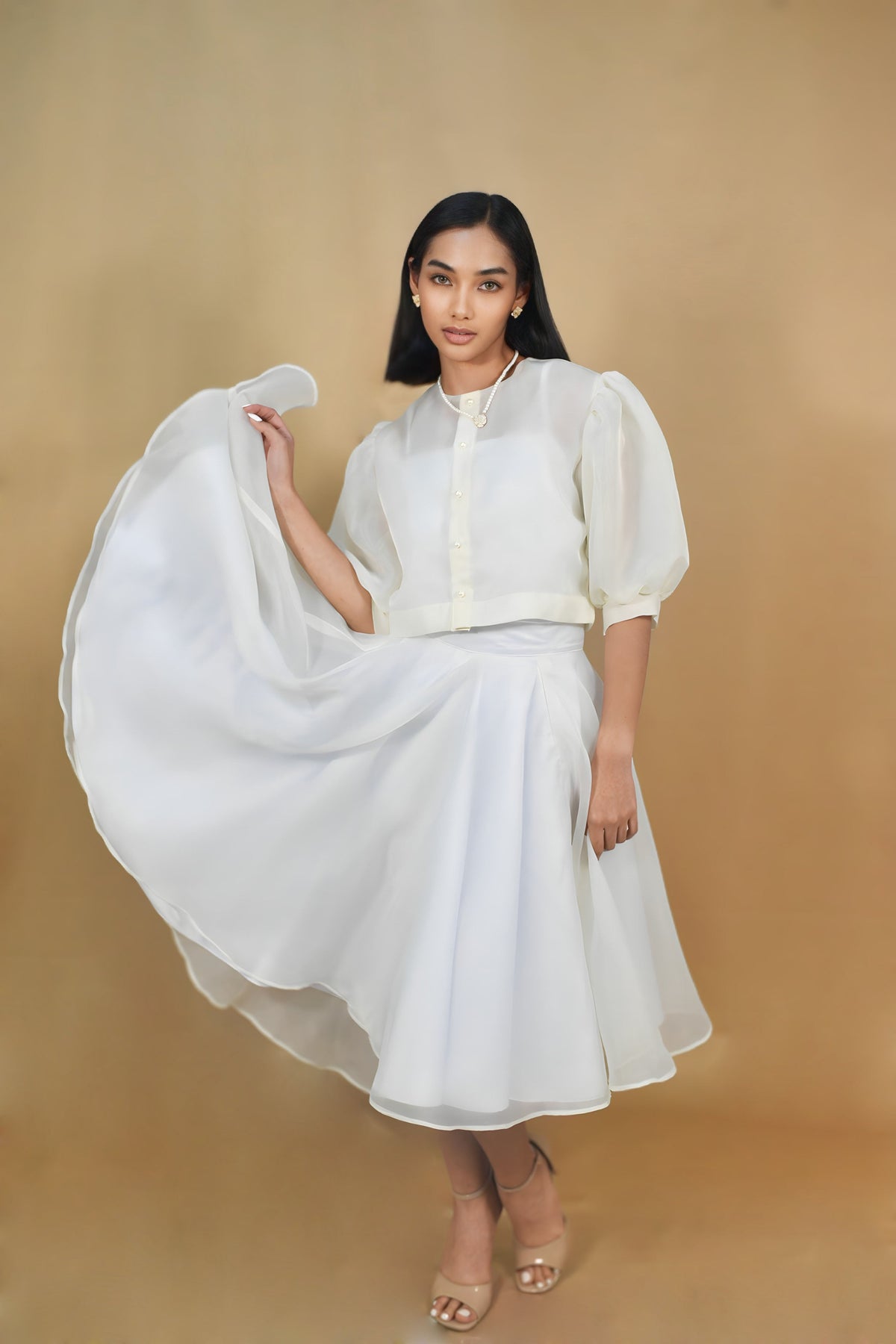
Knee or calf length with a softer sleeve. This is the workhorse of the category. It suits daytime weddings, graduations, christenings and office parties, and it does not need heels to hang correctly.
If you are buying your first Filipiniana dress and you are not the mother or the bride, start here.
Gown
Floor length without the stiffened terno sleeve. Often off-shoulder, sometimes with a slit. It reads as formal evening wear with a Filipino signature rather than a traditional costume.

Barong dress
Cut from the sheer embroidered cloth normally used for men's barong tagalog, reworked into a dress for women. Usually cream, beige or black. It is the easiest way for a couple to match without wearing an identical fabric.
Two-piece set and pantsuit
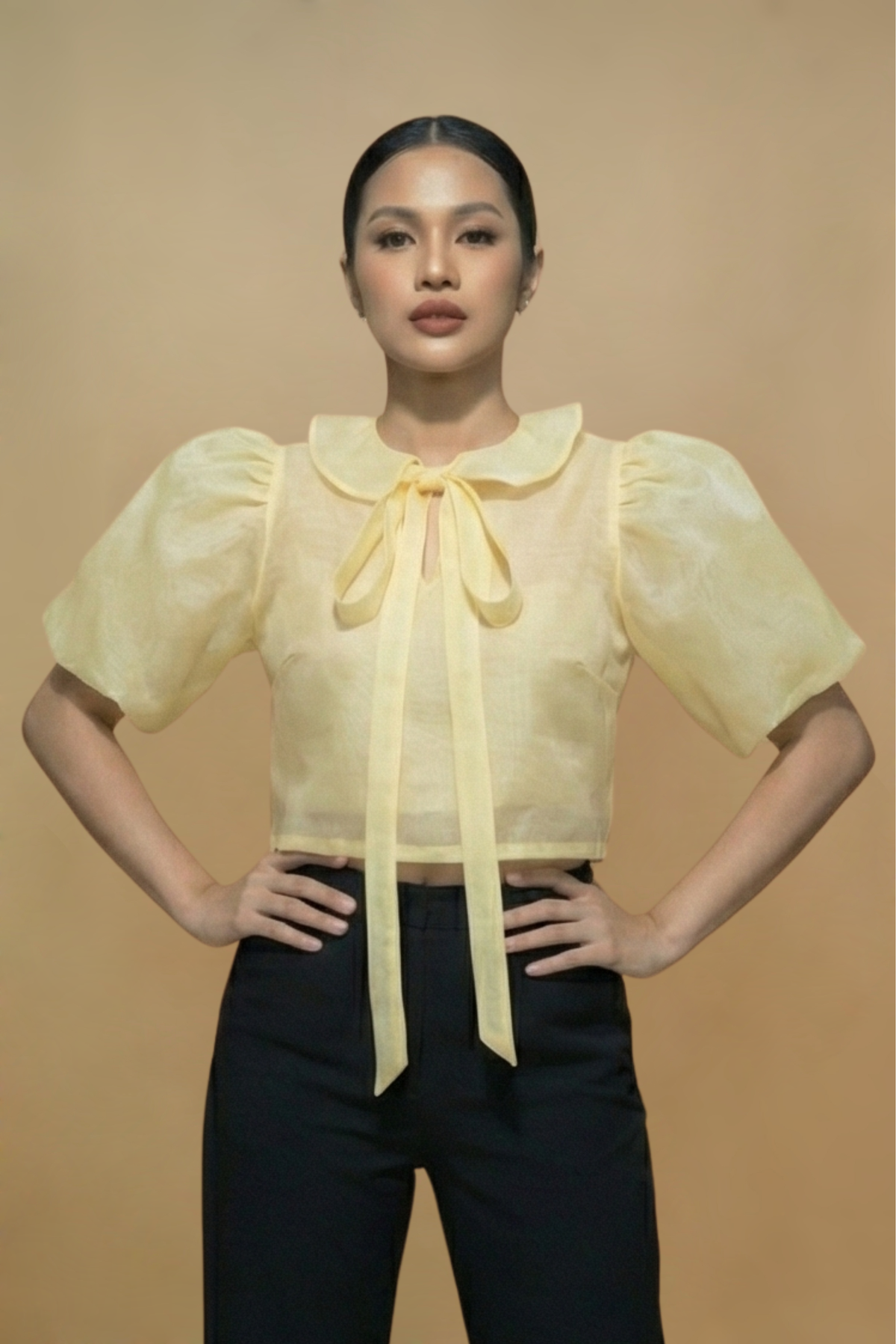
A Filipiniana top with matching trousers or a separate skirt. This is the newest addition and the one that works at conferences, award nights and corporate events where a gown would be wrong.
Matching the Filipiniana dress to the event
| Event | Silhouette | Length |
|---|---|---|
| Gala or state function | Terno | Floor |
| Mother of bride or groom | Serpentina or terno | Floor |
| Evening wedding, guest | Gown | Floor |
| Daytime wedding, guest | Modern midi | Calf |
| Graduation | Modern midi | Knee to calf |
| Corporate or awards night | Two-piece or pantsuit | Full |
| Cultural night or fiesta | Ethnic handwoven | Any |
Browse by cut in the modern Filipiniana dresses, the wedding collection, the mother dresses and the barong dresses.
Choosing a sleeve
The sleeve decides how the dress reads more than the hemline does. Four kinds turn up.
Stiff butterfly
Stands flat and high. Traditional and formal. Does not fit under a coat and needs care when packing.
Soft butterfly
The same outline with less structure. Lifts at the shoulder but folds down. The most practical for travel.
Puff
Gathered at the shoulder, rounded rather than flat. Reads younger and suits daytime events.
Off-shoulder
The sleeve sits below the shoulder line. Needs a strapless bra and limits how much you can lift your arms.
Colour
Two rules cover most situations. Avoid white, cream and ivory as a wedding guest unless the couple asked for them, since those are standard Filipiniana colours and you can end up matching the bride by accident. And check the entourage palette before ordering, because Filipino weddings often assign colours by role.
Beyond that, deeper shades photograph more reliably under indoor lighting than pastels do. Black, navy, burgundy and emerald hold their colour. Pale pink and powder blue can wash out under flash.

Fabric and how it changes the shape
- Organza and piña organza. Crisp and sheer. Holds a sleeve shape. Best for structured cuts.
- Jusilyn. Soft and light, easy to wash. Better for midi dresses than for a terno.
- Duchess and gazar. Heavy, smooth, opaque. Gives a gown weight and a clean line.
- Lace. Soft with an open pattern, used as the whole garment rather than as trim.
- Handwoven inabel and pinilian. Textured regional cloth where the weave carries the pattern. See the ethnic Filipiniana dresses.
A stiff fabric in a soft cut looks boxy. A soft fabric in a structured cut collapses. Match the two.
What the dress has to do on the day
A dress that photographs well can still be the wrong buy. Three practical questions are worth asking before you order.
How long will you be standing? A church ceremony plus a receiving line is two hours upright before you sit down. Dense beading and a heavy skirt are felt by the end of it. Lighter fabric wins for long days.
Will you be seated at a long table? Stiff butterfly sleeves take up room on both sides. At a crowded reception table they catch on chairs and neighbours. A soft sleeve or a puff avoids that.
Are you in the programme? If you are walking down an aisle, giving a speech or dancing, check that you can lift your arms. Off-shoulder cuts restrict that more than people expect.
Ordering the right size
Filipiniana sizing is cut to measurements rather than to a high-street number, so a size 10 in London or an 8 in Sydney tells you nothing useful here. Take three measurements and compare them against the size chart: bust, waist and shoulder width.
Shoulder width is the one people skip and the one that ruins a dress. The sleeve is set at a fixed angle, so if the shoulder is wrong the butterfly shape will not lift correctly no matter how the rest fits. A tailor can take in a waist. Resetting a sleeve is a different job.
Questions buyers ask
Which Filipiniana dress suits a shorter frame?
A modern midi or a serpentina. Both keep the vertical line unbroken. A wide floor-length skirt with a stiff sleeve can overwhelm a smaller frame.
Can I wear a Filipiniana dress to a non-Filipino wedding?
Yes. A gown or a modern midi reads as formal wear anywhere and needs no explaining. Keep the terno for events where cultural dress is expected.
Are these dresses lined?
Most full dresses are. Sheer tops and some lighter cuts are not, so check the product page and plan a slip if needed.
How far ahead should I order?
Earlier than feels necessary. Made-to-order sizes take longer than in-stock ones and international delivery adds time. See the shipping and delivery page.
Can a Filipiniana dress be worn more than once?
A midi or a two-piece set can. A terno is memorable enough that the same crowd will recognise it, so treat it as an occasion piece.
If you are comparing cuts side by side, the full Filipiniana dress range shows each silhouette in close-up, and the newest arrivals are where most new shapes appear first. Tell us the event and the date through the contact page and we can narrow it down for you.