Building a Filipiniana Wardrobe: What to Buy First and What Comes Later
Most people buy their first Filipiniana in a rush, three weeks before a cousin's wedding. It gets worn once and then sits in the back of a closet. A Filipiniana wardrobe built on purpose works differently: a few pieces that combine, so the next invitation does not mean another rushed order.
This is the order we suggest buying in, based on the events that actually recur for Filipino families in the US, Canada, the UK and Australia.
Count your events first
Before buying anything, list what comes up in a normal year. For most families it looks something like this:
- One or two weddings, sometimes as a guest, sometimes in the entourage
- A baptism or a child's birthday
- A graduation
- Buwan ng Wika at school in August, if you have children
- A community fiesta or Independence Day event in June
- A Christmas party, at work or with the Filipino community
That is five or six occasions, spread across the year, at three different levels of formality. One gown covers one of them. This is why the order of buying matters.
Buy first: a Filipiniana top
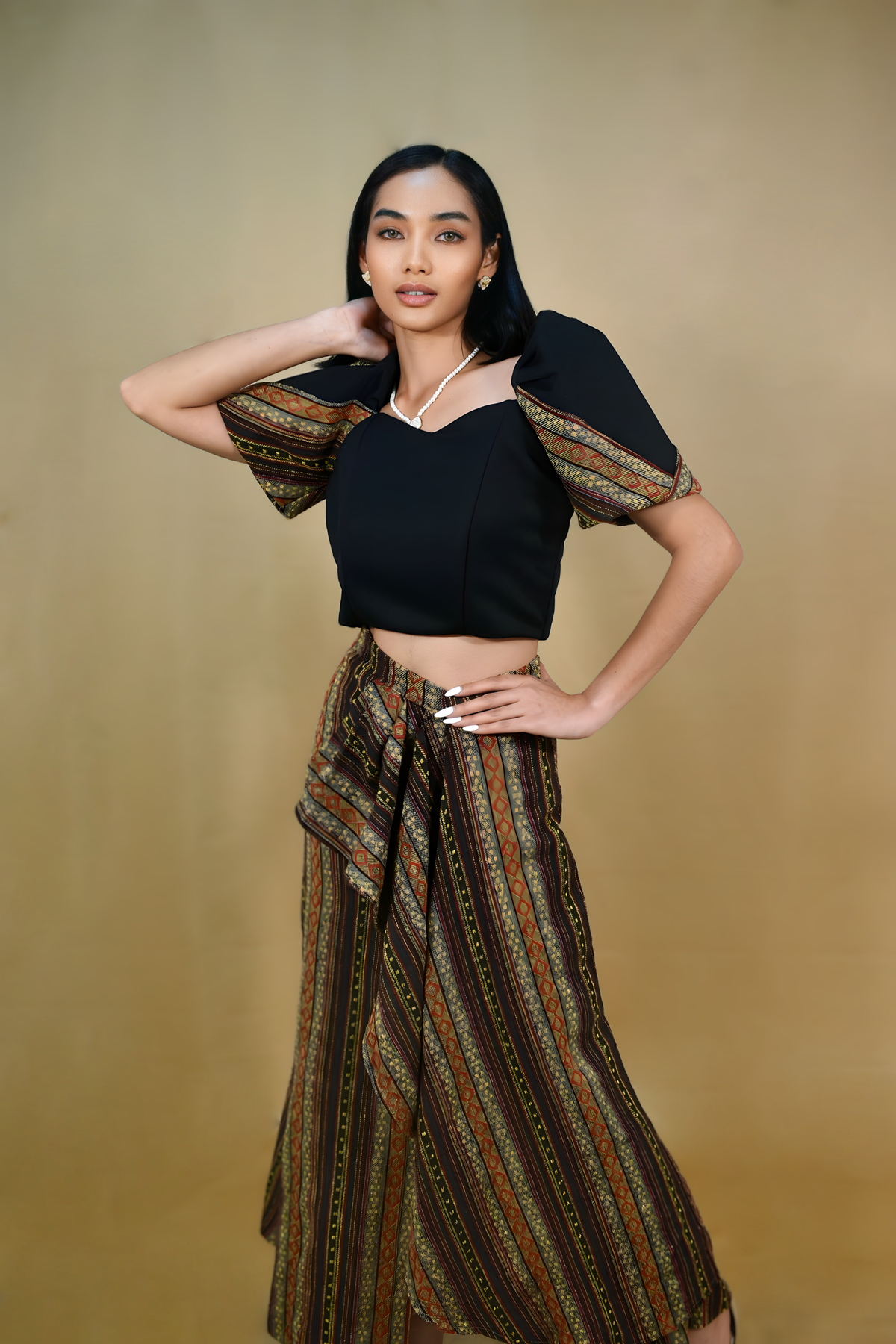
The single most useful thing to own is a blouse or kimona. It changes character depending on what you put with it, which is why it earns its place before anything else.
A Filipiniana blouse with tailored trousers reads as office wear. The same blouse with a long skirt reads as formal enough for a daytime wedding. A kimona with a plain skirt works for a school programme, and with dark jeans for a community gathering.

Choose a neutral for the first one. Cream, beige, grey or black will sit with more of what you already own than a strong colour will.
Buy second: a shoulder layer
A bolero or an alampay is the least expensive way to turn clothes you already own into Filipiniana. That matters more than it sounds, because it doubles the use of every dress in your closet.
A Filipiniana bolero over a plain black dress covers the shoulders for a church ceremony and comes off at the reception. An alampay does a softer version of the same job and folds flat into a bag, which makes it the practical choice if you are flying to the event.
Either one means you can attend a Filipino wedding without owning a Filipiniana dress at all.

Buy third: one proper dress
Now the dress makes sense, because you know what gap it fills. For most people that gap is an evening wedding or a formal event where a separate would read as too casual.
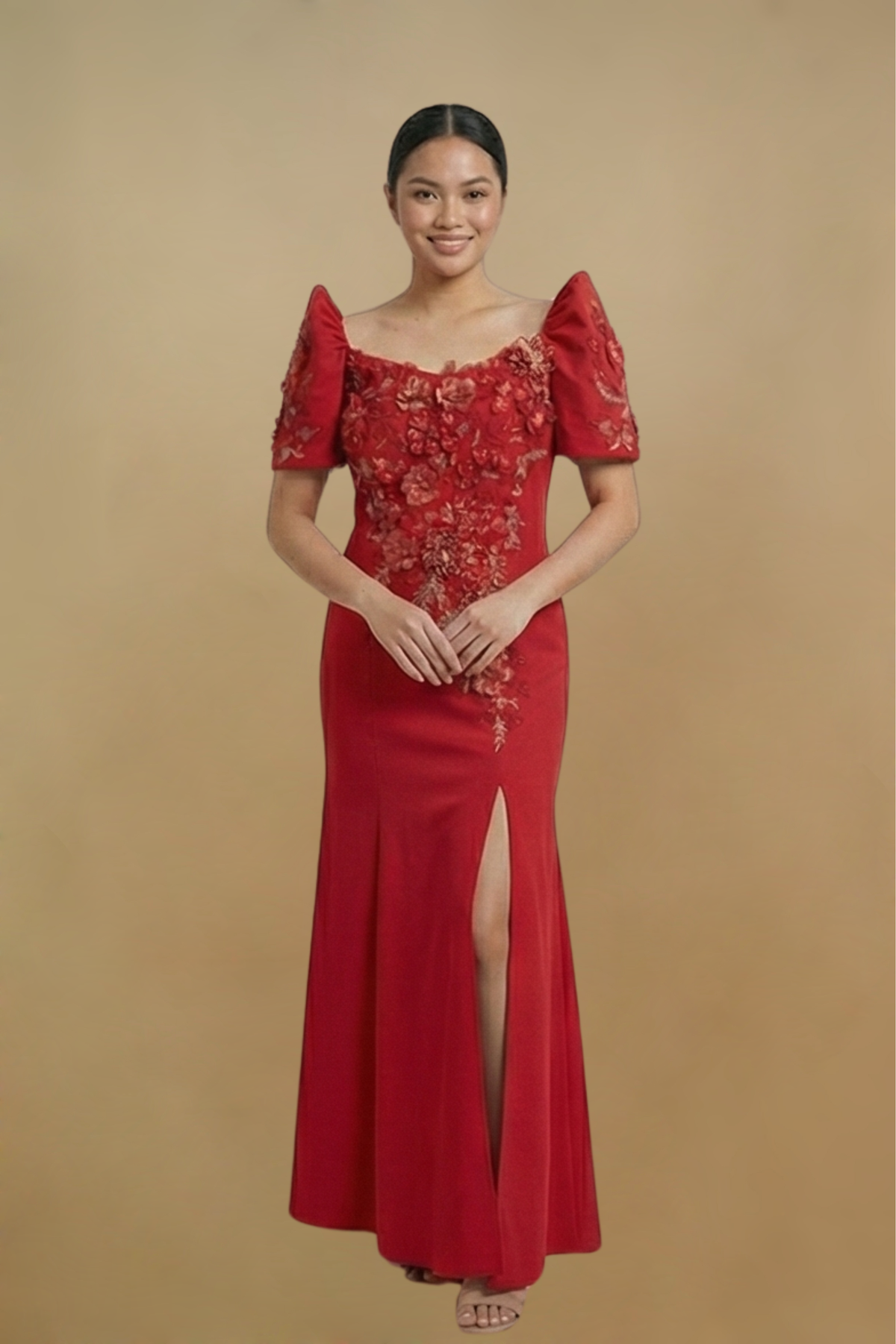
A modern midi from the modern Filipiniana dresses covers daytime formals and graduations. A floor-length gown from the Filipiniana dress range covers evening events. Buy whichever matches the invitations you actually get.
Skip the terno at this stage unless you are a mother of the bride or a principal sponsor. It is the most formal piece in the category and it is memorable, which means it does not repeat well in the same social circle.
What to add after that
| Add this | When it earns its place |
|---|---|
| Pañuelo | You attend traditional or church-heavy events and want a more formal shoulder layer |
| Ethnic handwoven piece | Cultural nights, fiestas, Independence Day |
| Mother dress | You are mother of the bride or groom, or a ninang |
| Barong dress | You want to match a partner in a barong without wearing the same fabric |
| Girls' Filipiniana | School programmes and family photographs |
Building a Filipiniana wardrobe that repeats well
Three habits keep a small collection working harder than a large one.
Stay in one colour family
If your top, bolero and alampay are all in the cream and beige range, any of them works with any of your skirts. Mixed strong colours reduce the number of combinations.
Vary the weight, not the look
Own one light piece and one structured piece rather than two similar ones. That covers a January wedding in Sydney and a December party in Toronto.
Keep one piece plain
Embroidery on embroidery does not layer well. A plain bolero or a plain skirt gives every worked piece something to sit against.
Buy for the body you have
A piece bought a size down for later will be worn never. Check the size chart and order to your current measurements.
What this costs over time
Buying in this order usually works out lower than buying one dress per event, though that is not obvious at the start. A gown bought for a single wedding sits unused until the next formal invitation, which may be two years away. A top and a bolero get worn four or five times in the same period.
There is a second saving that people miss. Rushed orders push you towards whatever is in stock in your size rather than what you actually wanted, and towards faster shipping. Buying ahead of a known event gives you the full range and the standard delivery option.
None of this argues against owning a gown. It argues for owning it third rather than first.
Looking after what you buy
A Filipiniana wardrobe only pays off if the pieces survive. Sheer fabric and fine stitching need slightly more care than everyday clothes, but not much.
- Hand wash in cool water, or dry clean anything heavily embroidered.
- Dry flat and out of direct sun. Sunlight fades dyed thread faster than washing does.
- Use padded hangers. Wire hangers leave a dent in organza at the shoulder.
- Store structured sleeves with tissue inside so they keep their shape between events.
- Press on low with a cloth between the iron and any stitching.

A note on wearing it abroad
One worry comes up often enough to answer plainly: whether a Filipiniana wardrobe is worth building if you are the only Filipino family at most events you attend.
It is. A modern Filipiniana top or a midi dress reads as well-made formal wear to anyone, Filipino or not, and it does not need explaining at the door. The pieces that need context are the traditional ones, and those are exactly the pieces you buy later, for events where the context already exists.
Questions we get
How many pieces do I actually need?
Three covers most people: one top, one shoulder layer, one dress. Anything beyond that is for events you know are coming.
Is it worth buying for children?
If they have a school Buwan ng Wika programme, yes. Children outgrow pieces quickly, so keep it simple and light rather than formal.
Can I mix pieces from different sets?
Yes, and most people do. Only a terno is matched by definition. Everything else is designed to combine.
What if I have one event and no plans for more?
Then buy the shoulder layer and wear it over a dress you own. It is the smallest commitment that still reads as Filipiniana.
How far ahead should I order?
Well before the month of the event. Made-to-order sizes take longer and international delivery adds time. See the shipping and delivery page.
If you are starting from nothing, the Filipiniana tops collection is the right first stop, and the newest arrivals show what has come in recently. Tell us which events you have coming up through the contact page and we can suggest an order to buy in.