Modern Filipiniana: How Traditional Filipino Dress Became Everyday Wear
For most of the last century, Filipiniana came out of the closet twice a year. It was worn for Independence Day, for Buwan ng Wika at school, and then folded away. Modern Filipiniana changed that. The cut got simpler, the fabric got lighter, and the pieces started working with clothes people already own.
This guide explains what actually changed and what the older names mean. It also covers how to pick a first piece if you live in the US, Canada, the UK or Australia.
The traditional pieces, briefly
Three names come up constantly, and they are often mixed up.
Baro't saya
The oldest of the three. Baro means blouse and saya means skirt, so the name simply describes a two-piece outfit. Filipino women wore versions of it before Spanish contact, and it stayed the everyday dress of most women through the colonial period.
Maria Clara
A more formal version that took shape in the 1800s. It layers four parts: the blouse, a long skirt, a stiff shoulder covering called the pañuelo, and an overskirt called the tapis. It takes its name from a character in José Rizal's novel Noli Me Tángere, published in 1887.
Terno
The terno appeared in the early 1900s. A designer joined the blouse and skirt into one dress, then lifted the sleeves into the stiff, flat butterfly shape people recognise today. Terno means "matched", because the top and skirt shared one fabric for the first time.

What modern Filipiniana changed
Modern Filipiniana keeps the signature details and drops the parts that made the old outfits hard to wear. Four changes matter most.
Softer sleeves
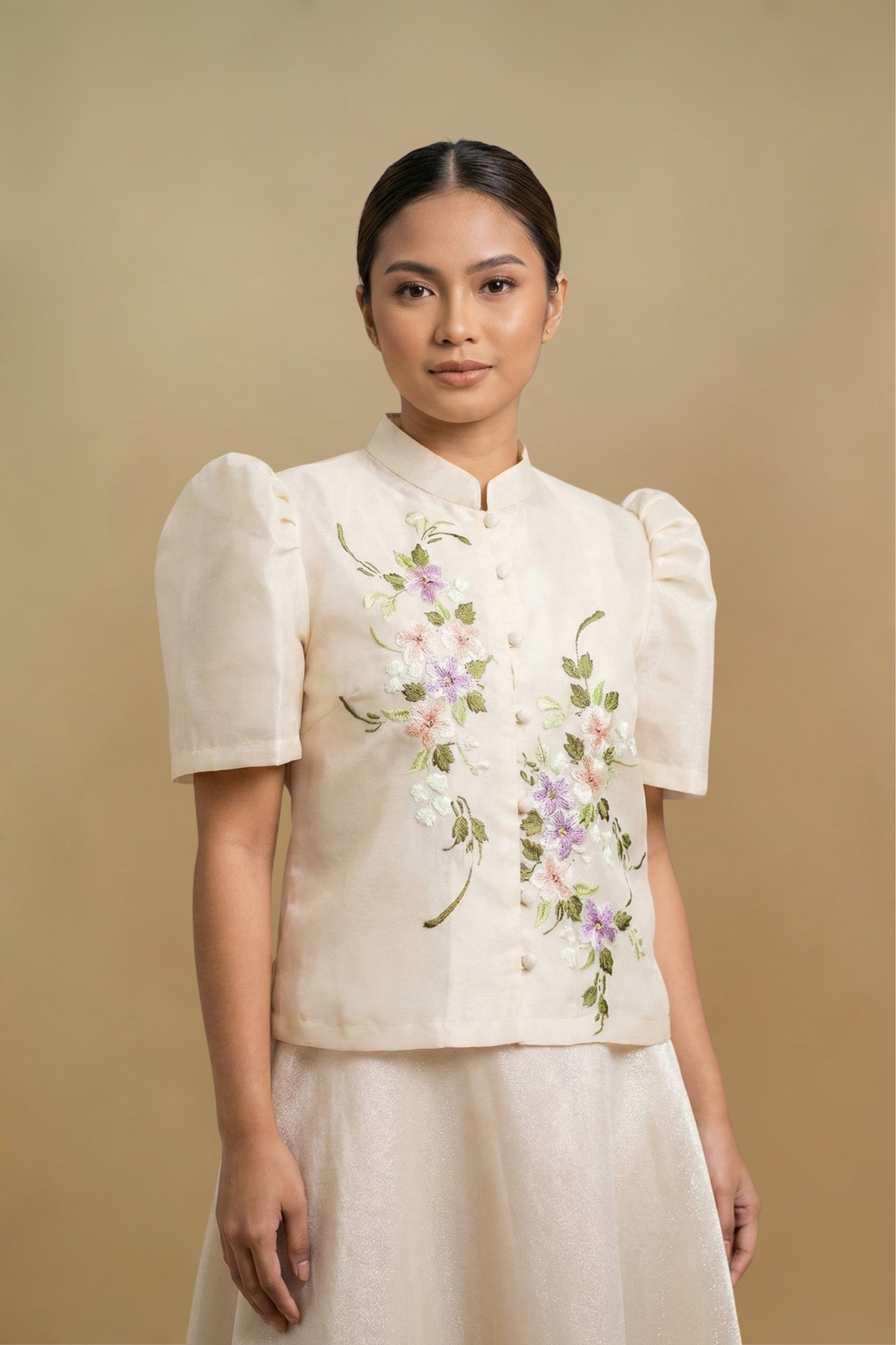
The classic butterfly sleeve is stiffened so it stands away from the shoulder. Modern versions use less structure. They still lift, but they fold into a suitcase and fit under a coat.
Lighter fabric
Jusilyn and light organza replaced heavier formal cloth on everyday pieces. They wash more easily and sit better in warm weather.
Separates instead of sets
A blouse, kimona or bolero can be bought on its own and worn with clothes you already have. You are no longer buying a whole outfit at once.
Shorter lengths
Midi dresses and knee-length cuts sit alongside floor-length gowns, which opens up daytime events.
The separates system
This is the practical heart of modern Filipiniana, and it is the least expensive way to start. Instead of one dress for one occasion, you buy one top and change what sits under it.
- A Filipiniana blouse with tailored trousers reads as office wear.
- The same blouse with a long skirt reads as formal.
- A Filipiniana bolero over a plain black dress turns a Western outfit into a cultural one in one layer.
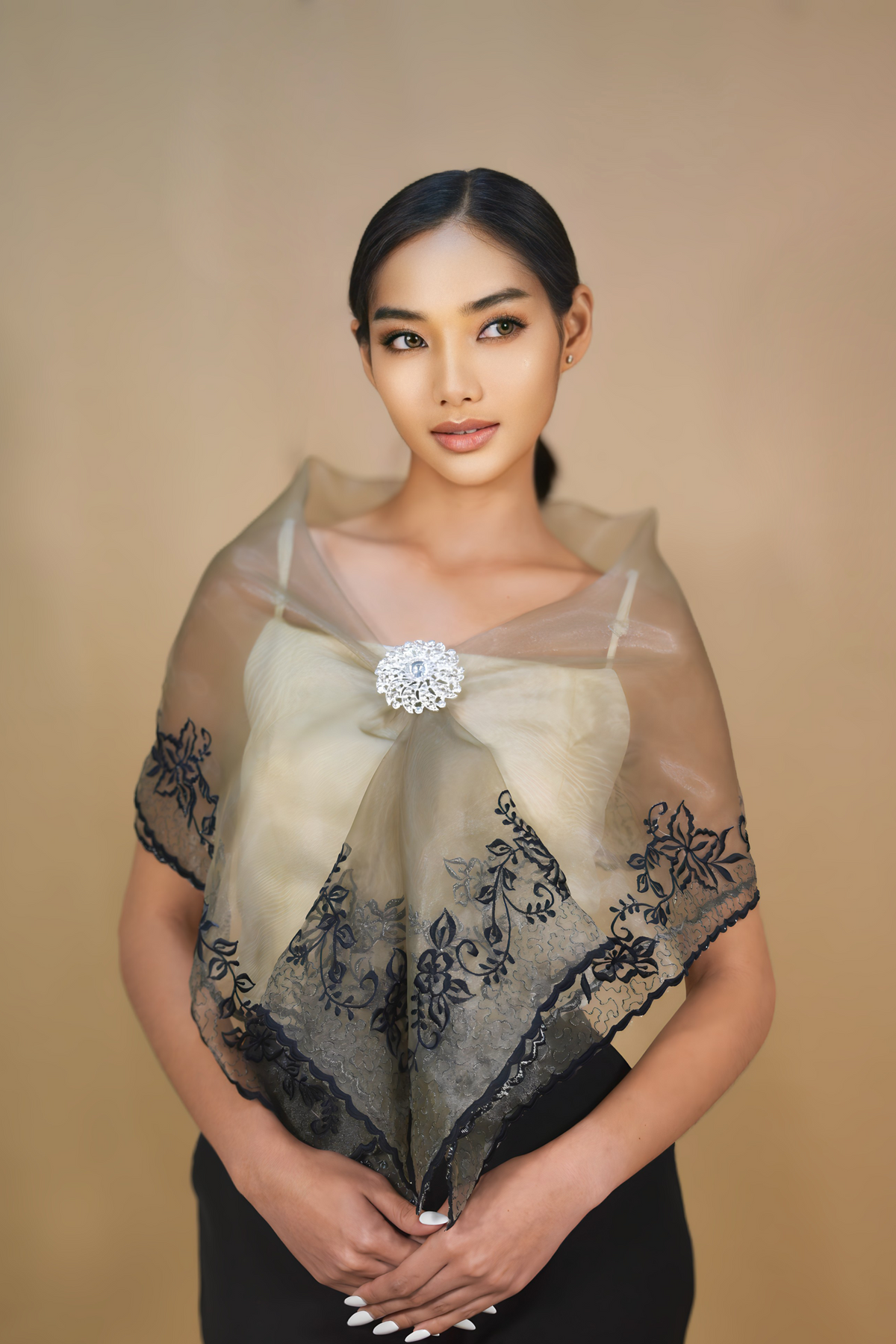
- An alampay, the sheer shoulder shawl, does the same job with even less bulk.
- A kimona, the light Visayan blouse, works with jeans for a relaxed look.
One top can cover four events. A gown covers one.

Wearing Filipiniana outside the Philippines
Living abroad changes the calculation in small ways. Climate and dress codes are the two that come up most.
In the UK and Canada you will often be layering. A structured butterfly sleeve does not fit under a winter coat. A softer sleeve works better, or a bolero you can take off at the door. In Australia, summer weddings fall in January, so sheer fabric and open embroidery beat heavy beading.
Shipping is worth thinking about too. Made-to-order pieces take longer to arrive than in-stock sizes, and customs can add days. Order well ahead of the event date rather than in the final month, and check our shipping and delivery page before you commit to a timeline.
Dress codes are usually less strict than in Manila. A modern Filipiniana dress reads as formal to any guest, Filipino or not, and it does not need explaining. That said, if you are the only person in cultural dress at a mixed wedding, a separate rather than a full gown is an easier first step.
Choosing a first piece by occasion
| Occasion | What works | Where to look |
|---|---|---|
| Filipino wedding, guest | Midi or long dress, softer sleeve | Modern Filipiniana dresses |
| Mother of the bride or groom | Structured dress or terno set | Mother dresses |
| Office or corporate event | Blouse with trousers, or a pantsuit | Filipiniana blouses |
| Graduation | Light kimona or simple dress | Kimona tops |
| Cultural night or fiesta | Handwoven cloth, stronger colour | Ethnic Filipiniana |
| Formal gala | Full gown, floor length | Filipiniana dresses |

What to spend on, and what to skip
A first purchase usually goes wrong in one of two ways. Either the piece is so formal it only fits one event, or it is so plain that nobody reads it as Filipiniana at all.
Spend on the fabric and the sleeve shape. Those are what people notice, and they are what a cheaper copy gets wrong. Skip heavy beadwork on a first piece, since it limits where you can wear it and it adds weight you will feel after two hours standing up.
Colour is the other decision that locks you in. Deep neutrals in black, cream, beige and navy carry across weddings, work and cultural events. A bright shade photographs beautifully but tends to be remembered, which matters if the same crowd sees you twice.
Fit and sizing
Filipiniana sizing runs differently from the high-street sizing you may be used to. Three points are worth knowing.
- The shoulder governs the fit. Butterfly sleeves are attached at a fixed angle. If the shoulder seam sits wrong, the sleeve will not sit right either.
- Embroidered panels have less stretch. Dense stitching does not give the way plain fabric does.
- Measure, do not guess. Check bust, waist and shoulder against the size chart rather than ordering your usual size.
Common questions
Is modern Filipiniana disrespectful to the tradition?
The tradition has changed before. The terno itself was a redesign of the baro't saya in the 1900s. What people object to is usually a costume-like copy with no craft behind it, rather than a well-made piece in a newer cut.
Can non-Filipinos wear it?
Yes. Guests and partners at Filipino weddings wear Filipiniana regularly, and it is usually taken as a compliment to the family.
What do I wear underneath a sheer blouse?
A camisole or slip in a colour close to your skin. Most sheer Filipiniana is designed with that layer in mind.
Is a terno too formal for a normal wedding?
A full terno reads as very formal and can outshine the bride. Most guests are better off with a midi dress or a blouse and skirt.
How do I pack one for travel?
Roll softer pieces rather than folding them. For structured sleeves, stuff the sleeve with tissue so it holds its shape in the case.
If you are buying your first piece, start with something you can wear more than once. The newest Filipiniana arrivals and the Filipiniana tops collection are both good places to compare cuts. Message us through the contact page if you want help choosing for a specific event.